
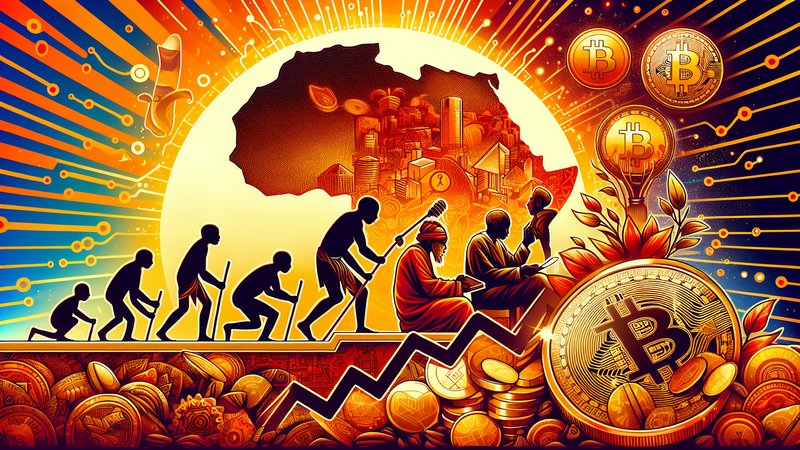
Unlocking Africa’s Blockchain Potential: How Bitcoin is Revolutionizing Financial Inclusion Across the Continent
As blockchain technology continues to reshape the global financial landscape, Africa stands at the forefront of a revolutionary transformation. In this compelling presentation, John Wainaina Karanja, founder and consulting lead of BitHub Africa, shares insights into how Bitcoin and blockchain technology are creating unprecedented opportunities for financial inclusion and innovation across the African continent.
Having witnessed Kenya’s technological evolution from the introduction of fiber optic internet to the revolutionary M-Pesa mobile money platform, Karanja brings a unique perspective on how permissionless innovation can drive economic transformation in Africa’s diverse markets.
Kenya’s journey with M-Pesa provides a crucial backdrop for understanding Bitcoin’s potential in Africa. M-Pesa revolutionized money transfers, allowing people to send funds across the country without the traditional risks of physical cash transport. As Karanja explains, “I could send money to my grandmother without giving my cousin cash in an envelope, and the envelope having reached my grandmother without a few notes.”
However, M-Pesa’s centralized nature creates limitations for entrepreneurs and developers. When Karanja attempted to build a mobile e-commerce platform called Crowdpesa in 2013, he encountered significant barriers: extensive documentation requirements, company registration mandates, and the need for operator trust. These challenges highlighted the need for a more open, permissionless system.
Bitcoin’s Promise of Permissionless Innovation
Bitcoin addresses these limitations by providing a decentralized platform that doesn’t require permission from intermediaries. This characteristic is particularly powerful in Africa, where young entrepreneurs are leveraging Bitcoin to transform their economic circumstances. Karanja shares the inspiring story of a 26-year-old who lifted his family out of poverty through Bitcoin trading and mining, eventually becoming a successful businessman.
Addressing Africa’s Unique Challenges
Building Trust Across Diverse Cultures
One of Africa’s greatest challenges is its incredible diversity – approximately 2,600 cultures speaking different languages. This diversity creates trust barriers that blockchain technology can help overcome. “On the Bitcoin blockchain, we all speak the same language,” Karanja notes, highlighting how the technology creates a universal protocol for value exchange.
Combating Corruption Through Transparency
Corruption poses a significant challenge across Africa’s smaller economies, where its impact on citizens is disproportionately large. Blockchain’s immutability offers a powerful tool for reducing corruption across various sectors, from land registration to loan issuance and credit scoring. Even reducing corruption by a factor of three could yield tremendous benefits for African citizens.
Overcoming Implementation Challenges
Resource Intensity and Mining Infrastructure
Despite Bitcoin’s potential, significant challenges remain. Mining operations require substantial capital expenditure, limiting Africa’s participation in this crucial aspect of the Bitcoin network. Karanja emphasizes that understanding mining is essential to grasping Bitcoin’s security and capital-intensive nature.
Simplifying User Experience
Perhaps the greatest challenge is making Bitcoin as user-friendly as M-Pesa, which even elderly users like Karanja’s grandmother can navigate easily. The complexity of explaining Bitcoin to non-technical users creates adoption barriers that must be addressed through improved user interface design and education.
Real-World Applications and Success Stories
Micro-Lending and Social Contracts
African communities are developing innovative lending models that leverage cultural norms rather than traditional collateral. In Kenya, social groups called “chamas” create peer pressure for loan repayment, enabling non-collateralized lending with high repayment rates. One startup processed $7 million in transactions within a year using this model.
Agricultural Innovation
BitMari, a Zimbabwe-based startup, demonstrates blockchain’s agricultural applications by using Bitcoin as digital coupons for farmers. The platform enables farmers to receive Bitcoin, exchange it at local bank branches, and purchase essential supplies like fertilizer and seeds – creating a seamless bridge between cryptocurrency and traditional agricultural needs.
Peer-to-Peer Energy Trading
Blockchain technology opens possibilities for decentralized energy markets in rural Africa. Karanja envisions scenarios where small-scale farmers with solar installations can sell excess energy to neighbors, creating micro-economies powered by blockchain-enabled peer-to-peer transactions.
BitHub Africa’s Mission and Impact
BitHub Africa drives blockchain adoption across the continent through education, regional meetups, and training workshops. The organization has engaged with most African regulators and recently opened an incubator that serves as both a co-working space and startup accelerator, focusing on open and permissionless innovation.
The organization has also conducted comprehensive research, interviewing 16 blockchain platform developers and founders to identify specific African use cases for the technology. This research, currently under peer review, will provide valuable insights for the broader blockchain community.
Key Takeaways
- Permissionless Innovation: Bitcoin’s decentralized nature eliminates barriers that centralized platforms like M-Pesa create for entrepreneurs and developers
- Cultural Bridge: Blockchain technology provides a universal language that can unite Africa’s 2,600 diverse cultures in economic collaboration
- Corruption Solution: Blockchain’s immutability offers powerful tools for reducing corruption across land registration, lending, and credit scoring
- Real Economic Impact: Young Africans are already using Bitcoin to escape poverty and build successful businesses
- Innovation in Traditional Sectors: From agriculture to energy, blockchain enables new business models that bypass traditional intermediaries
The Path Forward
As Africa continues its digital transformation journey, blockchain technology represents more than just a technological upgrade – it’s a pathway to true financial sovereignty and inclusion. While challenges around user experience, technical complexity, and infrastructure remain, the foundation for blockchain adoption is stronger in Africa than in many other regions.
The continent’s experience with mobile money, combined with its young, tech-savvy population and pressing need for financial inclusion, creates ideal conditions for blockchain innovation. As BitHub Africa and similar organizations continue their educational mission, we can expect to see more groundbreaking applications that leverage blockchain technology to solve uniquely African challenges.
The future of African blockchain adoption lies not in copying Western models, but in developing indigenous solutions that address local needs while leveraging global blockchain infrastructure. This approach promises to position Africa not as a follower in the blockchain revolution, but as a leader in demonstrating how decentralized technologies can drive inclusive economic growth.