
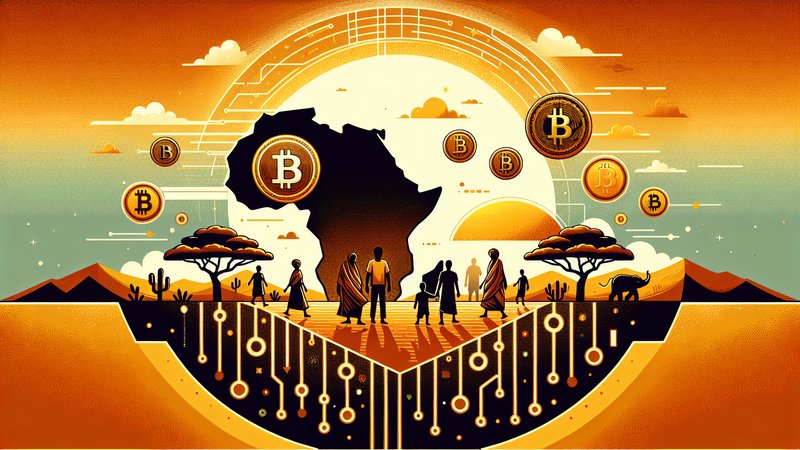
Building Africa’s Financial Future: Why Blockchain Technology is Our Path to Economic Sovereignty
My fellow African innovators, I want to share something that’s been burning in my heart for over a decade now. When I first discovered Bitcoin and blockchain technology, I wasn’t just seeing code and cryptography – I was seeing the keys to Africa’s financial liberation. After ten years of building blockchain infrastructure across our continent through BitHub Africa, I can tell you this: we’re not just participating in a global revolution – we’re leading it.
The conversation in this video captures something profound that many of us in the African blockchain space have been saying for years. While the world debates the merits of decentralized technology, we’re already living its reality. From Lagos to Nairobi, from Cape Town to Accra, our people are using blockchain to solve problems that traditional systems have failed to address.
Yes, Africa is rising – but let me tell you what that really means from someone who’s been in the trenches building this future. When I started my journey in this space, trying to integrate with mobile money platforms in Kenya was like hitting a brick wall. The closed systems, the gatekeepers, the endless bureaucracy – it all pushed me toward Bitcoin. And I’m grateful it did.
Think about this: we have M-Pesa processing billions of dollars monthly, proving that Africans are ready for digital financial innovation. But try buying land in Kenya, as mentioned in the video, and you’ll encounter the same corruption and inefficiencies that have plagued our systems for decades. This is where blockchain becomes revolutionary – not just evolutionary.
The speaker in the video talks about Bitcoin being “500 times more secure than all supercomputers combined.” That’s not just a technical statement – that’s a promise of what’s possible when we build systems designed for trust from the ground up.
Why Blockchain is Africa’s Natural Evolution
Here’s what excites me most about our blockchain journey in Africa: we’re not trying to retrofit old systems. We’re leapfrogging directly to the future. Just as we skipped landline infrastructure and went straight to mobile, we’re now jumping from traditional banking to decentralized finance.
At BitHub Africa, our research showed that 67% of surveyed individuals across the continent were interested in blockchain from a startup perspective. These aren’t just statistics – these are our future leaders recognizing that blockchain offers something traditional systems don’t: permission-less innovation.
When the video mentions that young guy in Kisumu buying Bitcoin for 500, 1000, 10,000 shillings as an investment – that’s not speculation, that’s financial inclusion. That’s a young African who can’t access traditional investment vehicles finding a way to build wealth. That’s revolutionary.
The Power of Peer-to-Peer: Banking Without Banks
The most powerful point in this discussion is about peer-to-peer trading in Kenya reaching 10 million shillings weekly despite regulatory warnings. This tells us everything we need to know about organic demand. When people need something badly enough, they’ll find a way to get it, regulations or not.
I’ve witnessed this firsthand across Africa. In Nigeria, during banking restrictions, peer-to-peer Bitcoin trading exploded. In Zimbabwe, during currency crises, Bitcoin became a store of value. In South Africa, during economic uncertainty, blockchain became a pathway to global markets.
The prediction about children born today not understanding bank branches isn’t fantasy – it’s inevitable. These kids will grow up thinking in terms of instant, global, permissionless transactions. They’ll wonder why their parents had to wait three days to send money internationally when Bitcoin moves in minutes for a five-shilling fee.
Smart Contracts: Removing the Middleman
The discussion of smart contracts particularly resonates with our African context. How many business deals have fallen through because of trust issues? How many investments have been lost to intermediaries who disappeared with funds? Smart contracts eliminate these problems by making trust automatic and enforceable by code.
Imagine land transactions in Kenya executed through smart contracts – no bribes, no lost documents, no disputes over ownership. Imagine lending contracts that automatically adjust interest rates based on the new 14% cap mentioned in the video. Imagine cross-border trade agreements that execute automatically when goods are delivered.
This isn’t science fiction. At BitHub Africa, we’re working with startups building exactly these solutions right now.
Our Fintech Evolution: From Mobile Money to Blockchain
The video mentions Talab, a micro-lending platform that moved 700 million shillings in transactions with just four people. This demonstrates something crucial: blockchain-based financial services can scale massively with minimal human infrastructure. For a continent where traditional banking infrastructure is limited, this is transformational.
We’re seeing social lending platforms integrate with our traditional chama and sacco systems. We’re witnessing peer-to-peer lending that bypasses banks entirely. We’re building automated financial advisors that serve populations that banks have historically ignored.
This is Africa writing its own financial rules, using technology that doesn’t ask permission from anyone.
The Challenges We Must Address
Let me be honest about the challenges, because we can’t build a sustainable future by ignoring them. Blockchain technology is still complex, resource-heavy, and early in its development. Many of our people struggle to understand how it works, and that creates barriers to adoption.
Regulatory uncertainty remains a significant challenge. The Central Bank of Kenya’s warning against Bitcoin created problems for exchanges, but it couldn’t stop peer-to-peer trading. This tells us we need better dialogue between innovators and regulators – not adversarial relationships, but collaborative ones focused on consumer protection while enabling innovation.
We also need to address the energy concerns and accessibility issues that come with blockchain technology. Our solutions must be environmentally sustainable and economically accessible to all Africans, not just the tech-savvy elite.
Looking Forward: Our Blockchain Vision for Africa
After a decade in this space, I’m more convinced than ever that blockchain represents Africa’s path to true financial sovereignty. We’re not just adopting Western technology – we’re adapting it to solve uniquely African problems in uniquely African ways.
The future I envision has African farmers using smart contracts to sell directly to global markets. African artists tokenizing their work and selling to collectors worldwide. African developers building decentralized applications that serve billions of people. African entrepreneurs accessing global capital without intermediaries taking massive cuts.
This future requires us to think beyond just cryptocurrency trading. We need to build robust infrastructure, educate our communities, and work with regulators to create enabling environments for innovation.
Key Takeaways
- Permission-less Innovation: Blockchain allows African entrepreneurs to build financial services without waiting for approval from traditional gatekeepers
- Leapfrog Opportunity: Just as we jumped from no phones to mobile phones, we can jump from limited banking to comprehensive decentralized finance
- Organic Demand Exists: 10 million shillings in weekly peer-to-peer Bitcoin trading in Kenya proves Africans want these solutions
- Smart Contracts Solve Trust Issues: Automated, transparent contracts can eliminate corruption and intermediary risks in business transactions
- Financial Inclusion is the Goal: Blockchain enables people excluded from traditional banking to participate in the global economy
Brothers and sisters, we stand at a crossroads. We can continue depending on financial systems designed elsewhere, for other people’s problems. Or we can build our own future using technology that puts power directly in the hands of our people.
At BitHub Africa, we’ve made our choice. We’re building the infrastructure for Africa’s blockchain future. We’re training the developers who will create tomorrow’s applications. We’re fostering the startups that will serve our communities’ needs. We’re proving that Africa doesn’t just consume technology – we create it.
The question isn’t whether blockchain will transform Africa’s financial landscape. The question is whether you’ll be part of building that transformation or watching it happen from the sidelines. I know where I stand. Where do you?
Join us at BitHub Africa as we continue building the infrastructure for Africa’s decentralized future. Because the revolution isn’t coming – it’s here, and it’s ours to shape.