
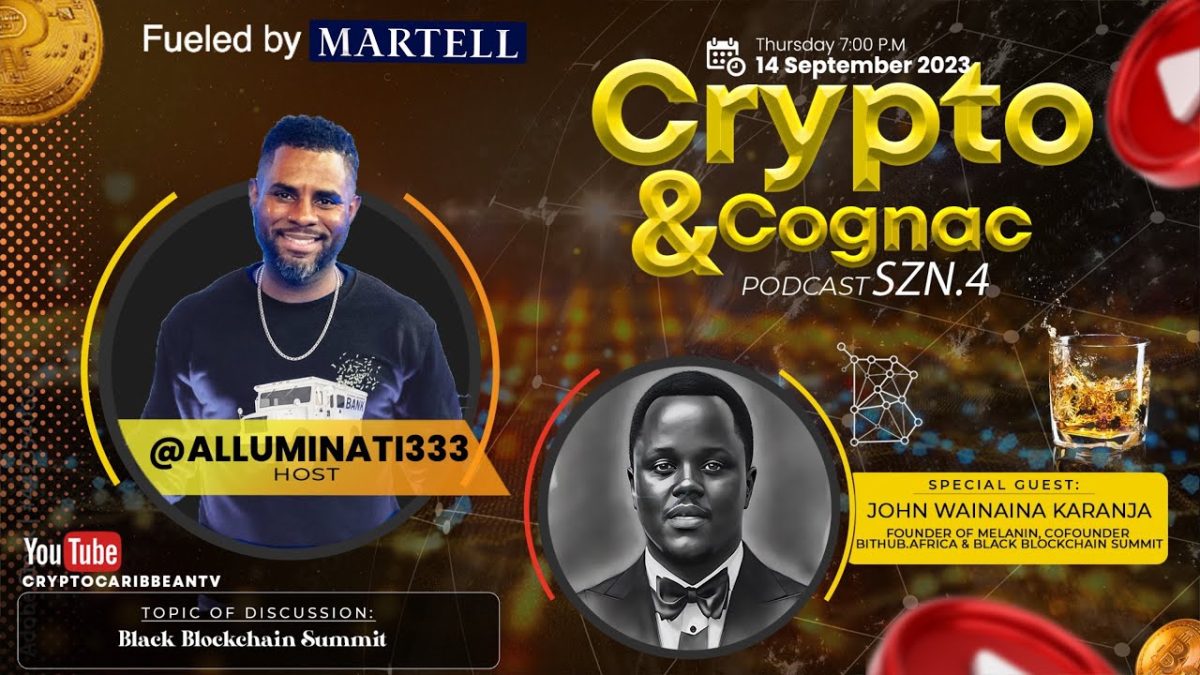
The Black Blockchain Summit represents more than just another crypto conference—it’s a movement born from necessity. When John Wainaina Karanja attended Bitcoin 2014 in Amsterdam as one of only three Black participants, he witnessed firsthand the diversity gap that still plagues the blockchain industry today.
In this illuminating conversation from the Crypto & Cognac Podcast, Karanja shares the remarkable journey from a failed Kenyan e-commerce startup to co-founding both BitHub Africa and the Black Blockchain Summit, now entering its sixth year as Africa’s premier blockchain gathering.
From Startup Failure to Bitcoin Discovery
Karanja’s crypto journey began in 2013 with disappointment. His e-commerce platform CrowdPESA struggled to integrate with M-Pesa, Kenya’s revolutionary mobile payment system, due to technical restrictions that favored established players over local startups.
“We did not have the financial power or runway that well-funded startups from outside Kenya had,” Karanja explains. This setback led to a pivotal moment when his co-founder Chris Kakumba heard about a Bitcoin summit at Nairobi’s iHub incubator.
The moment Karanja learned about Bitcoin, everything changed. “I was like Eureka—this is what we needed, a way to have payments online.” Using their remaining startup savings, he bought a ticket to Bitcoin 2014 in Amsterdam, marking the beginning of his decade-long journey in blockchain.
The Eye-Opening Amsterdam Experience
At Bitcoin 2014, Karanja encountered a stark reality that would shape his future mission. Among hundreds of attendees, he found only eight Black people—five serving refreshments and just three participants: himself, Alakanani (the Bitcoin Lady), and Sinclair Skinner, who would later become his co-founder.
This experience crystallized the need for inclusive blockchain education and community building. “There are certain groups who have been politically, economically, and to some degree socially and culturally excluded from opportunities widely available to more established people in society,” Karanja reflects.
Building BitHub Africa
Following Amsterdam, Karanja and his team founded BitHub Africa, a web3 community and incubator based in Nairobi. The organization has dedicated itself to accelerating blockchain adoption throughout Africa, conducting some of the first Bitcoin meetups across multiple African countries.
BitHub Africa now operates as part of the broader Melanin Solar portfolio, combining blockchain technology with distributed energy storage solutions—addressing two of Africa’s most pressing needs: financial inclusion and energy access.
The Historic HBCU Bus Tour
In 2017, Karanja and Sinclair Skinner embarked on an ambitious project that would directly inspire the Black Blockchain Summit: a cross-country bus tour targeting Historically Black Colleges and Universities (HBCUs).
The branded bus, featuring Bitcoin messaging alongside African and Caribbean heroes like Marcus Garvey, visited 11 HBCUs across 21 states. “We talked to hundreds of Black kids who had never heard about Bitcoin, who had never had somebody come speak to them about this disruptive technology,” Karanja recalls.
The tour wasn’t without challenges. Traveling through Middle America with such prominent branding drew attention—both curious and concerning. Despite a “Mexican standoff” incident at a Mississippi motel, the tour successfully introduced Bitcoin to underserved communities that traditional crypto conferences rarely reach.
Birth of the Black Blockchain Summit
The success of the HBCU bus tour convinced Karanja and Skinner to establish a permanent platform for Black blockchain education and networking. In 2018, they launched the Black Blockchain Summit at Howard University, one of America’s most prestigious HBCUs.
Now in its sixth year, the summit has evolved into an annual gathering that unites thought leaders, technology innovators, and blockchain advocates. The event focuses specifically on blockchain technology’s potential within Africa and African diaspora communities worldwide.
Addressing the Diversity Question
Critics sometimes question the need for race-specific blockchain events, viewing them as potentially divisive. Karanja addresses this directly: “I always look at things as an engineer first and then political scientist second. I believe in an even playing field—technology can give any person opportunities, whether they’re Black or white, man or woman.”
However, he emphasizes that certain groups have faced systematic exclusion from technological opportunities. The Black Blockchain Summit exists to level that playing field, ensuring that transformative blockchain technology reaches communities that might otherwise be overlooked.
The Broader Impact
Karanja’s work extends beyond conferences and meetups. Through Melanin Solar, he’s pioneering the intersection of blockchain and renewable energy—two technologies crucial for Africa’s development. This innovative approach demonstrates how blockchain can address real-world challenges while creating economic opportunities.
His academic background—an MSc in Political Sociology from Oxford University and a Bachelor of Business and Information Technology from Strathmore University in Kenya—informs his holistic approach to technology adoption and social change.
Key Takeaways for African Blockchain Development
- Representation Matters: Diverse voices in blockchain development lead to more inclusive and effective solutions
- Education is Foundation: Grassroots education efforts can transform entire communities’ relationship with new technology
- Local Solutions: Blockchain applications must address real African challenges, not just replicate Western models
- Community Building: Long-term relationships and networks are more valuable than one-off educational events
- Cross-Border Collaboration: African blockchain development benefits from diaspora connections and knowledge sharing
Looking Forward: The 2023 Summit and Beyond
As the Black Blockchain Summit prepares for its 2023 edition, Karanja’s vision continues expanding. The event now serves as a crucial networking hub for Black blockchain professionals, entrepreneurs, and advocates from across the globe.
The summit’s agenda typically covers regulatory frameworks, DeFi applications for underbanked populations, NFTs and digital ownership, sustainable blockchain mining in Africa, and cross-border payment solutions—all viewed through the lens of empowering African and diaspora communities.
For BitHub Africa and the broader African blockchain ecosystem, events like the Black Blockchain Summit represent more than conferences—they’re catalysts for the inclusive technological revolution that Karanja envisioned when he first heard about Bitcoin in a Nairobi co-working space ten years ago.
The journey from those early meetups to today’s thriving community demonstrates that representation, persistence, and purpose can transform not just individual lives, but entire technological landscapes. As Africa continues embracing blockchain technology, pioneers like John Wainaina Karanja ensure that this transformation benefits everyone, not just the traditionally privileged few.